— Customs & events

The valley keeps its own rhythm.

Palm bundles in spring, garlanded cattle in autumn, gun salutes and straw-clad figures in Advent: in the Berchtesgaden region, customs are part of everyday life. Here you can see what happens when, and how to join in as a considerate guest.

— Through the year

Lived, not staged.

Most customs in the Berchtesgaden region follow the church year and the summer on the high pastures. Clubs, parishes and families keep them alive for their own sake: visitors are welcome at many of them, but some deliberately take place without an audience, and some dates are never published. Our calendar shows what happens when, and where you can watch.

Sunday before Easter · every parish

Palm Sunday and its colourful palm bundles

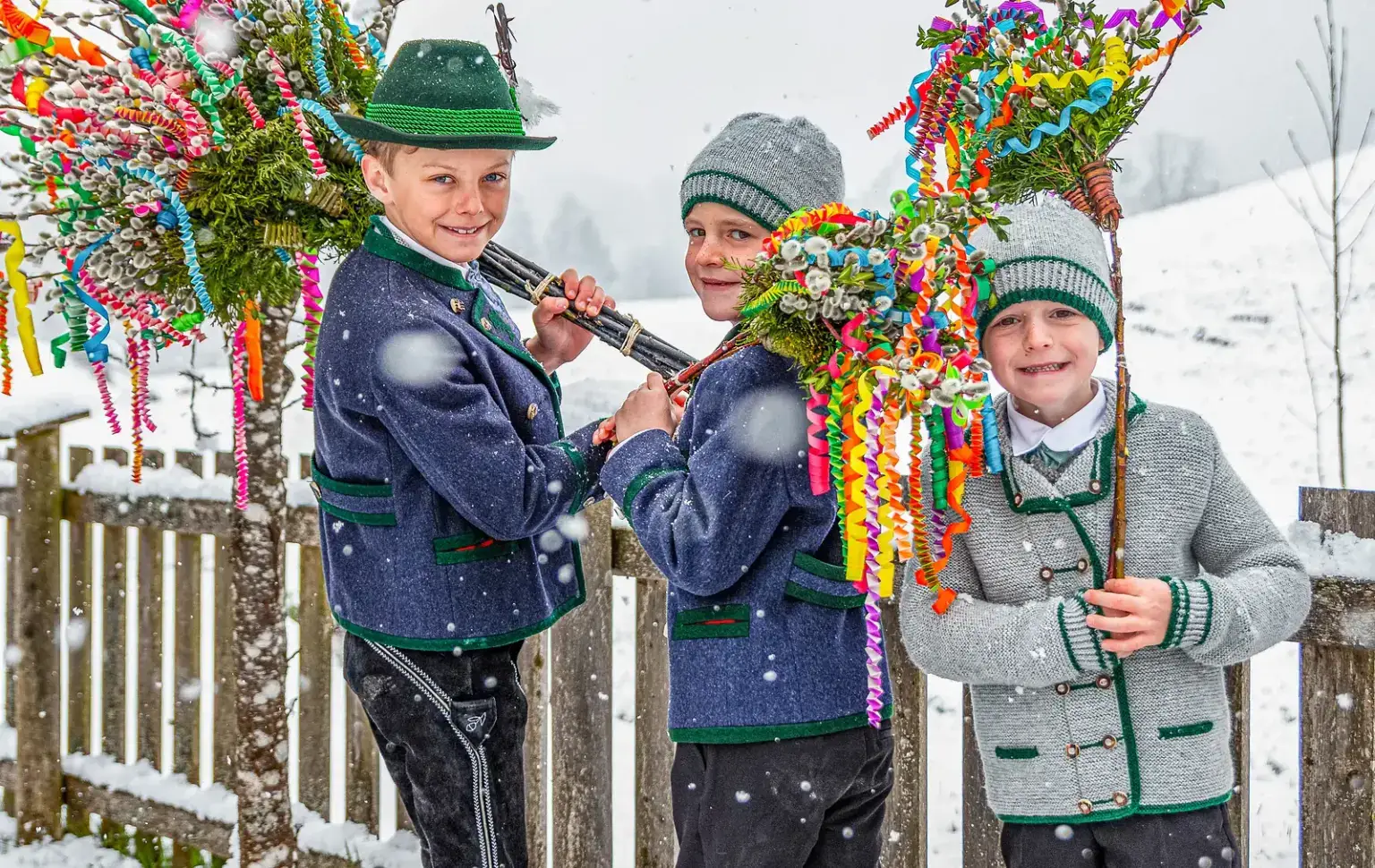
Before Easter, families bind pussy willow into palm bundles decorated with dyed wood shavings; bundles this colourful are typical only of the Berchtesgaden region. On Palm Sunday the children carry them to be blessed, followed by procession and Mass in every parish. Afterwards the palms go to fields, prayer corner and family graves.

When

Palm Sunday, the Sunday before Easter

Where

every parish, e.g. Bischofswiesen and Oberau

Times

in the Stiftsland parish service schedule (German)

For guests

watch outside the church just before the blessing

Our tip

You will see the bundles best outside the church just before the blessing; the Mass that follows is a service, not a performance.

Palm Sunday at berchtesgaden.de (German) ↗
Boys in traditional dress carrying colourful palm bundles on Palm Sunday in Oberau
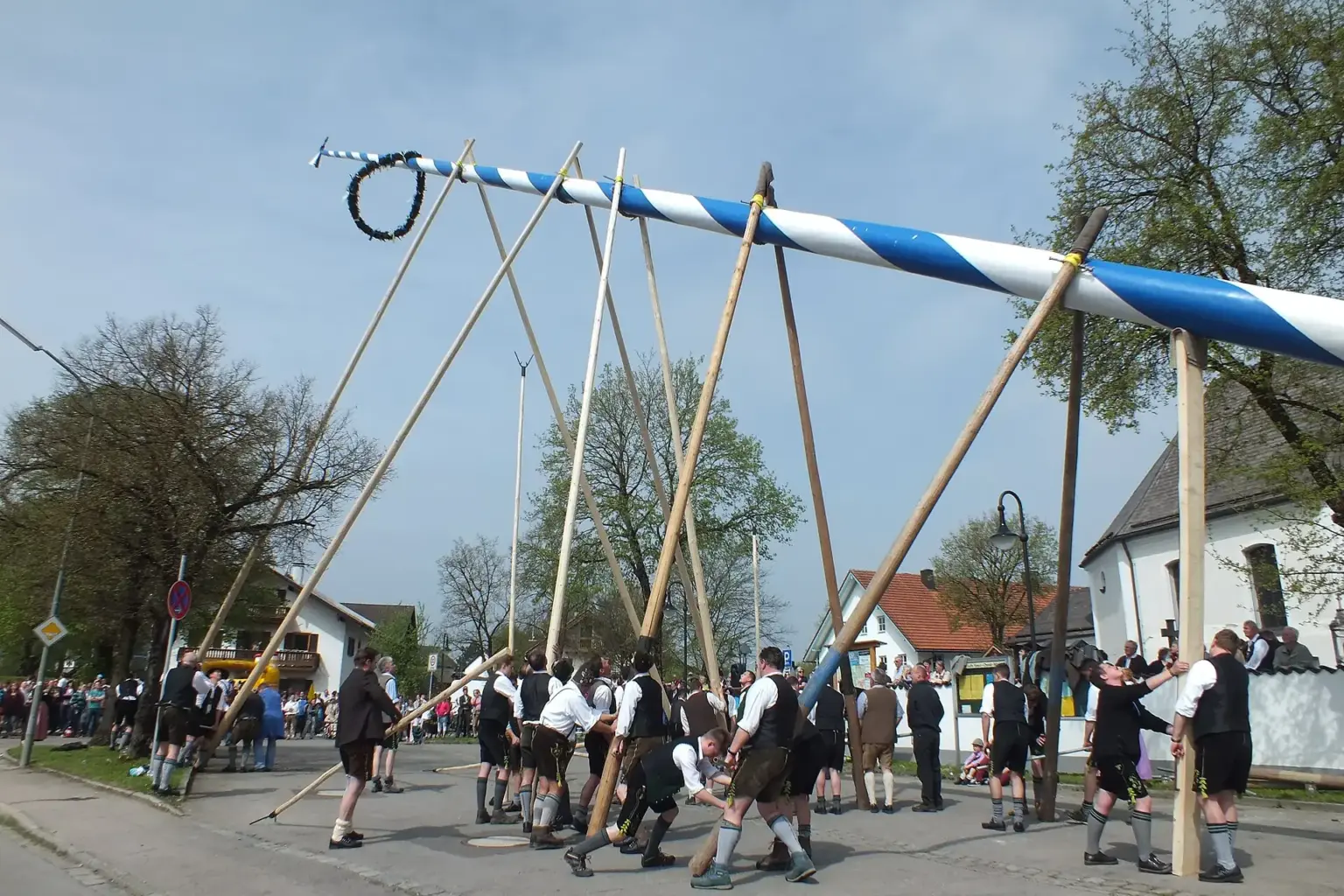
Raising a maypole by muscle power: young men in lederhosen push the blue-and-white pole upright with long wooden poles

Around 1 May · in the villages

A maypole raised by muscle power

In late April or early May the maypole is heaved upright by muscle power alone, with brass music, dancing and often a pole-climbing contest. In the valley the trunk is usually peeled and natural, in the Rupertiwinkel painted blue and white. Maypoles stay up for years, so not every village raises one each spring.

When

around 1 May

Where

changing villages in the valley and the Rupertiwinkel

Duration

raising takes hours, then a village fête

For guests

welcome; follow the stewards in the festival area

Our tip

Come along for the late-morning Frühschoppen, that way you will see the raising from the very start.

Maypole at berchtesgaden.de (German) ↗

Whitsun · Berchtesgaden town

The salt miners’ Bergfest

For over 500 years the salt miners have celebrated their guild festival at Whitsun in historic uniform; the longest-serving miner carries the “Bergmanndl” emblem. The ceremony underground is for miners only; parade, service and procession are public. Whit Sunday evening brings a concert, on Whit Monday morning the miners march to church and through town.

When

Whit Sunday and Whit Monday

Where

salt mine, Nonntal, collegiate church, town centre

From the hotel

approx. 12 min by car · bus 841/839

Note

the salt mine is closed to visitors on Whit Monday

Our tip

Good spots line the route from Nonntal past the collegiate church to the market square; check exact times in the events calendar shortly before.

Bergfest at berchtesgaden.de (German) ↗
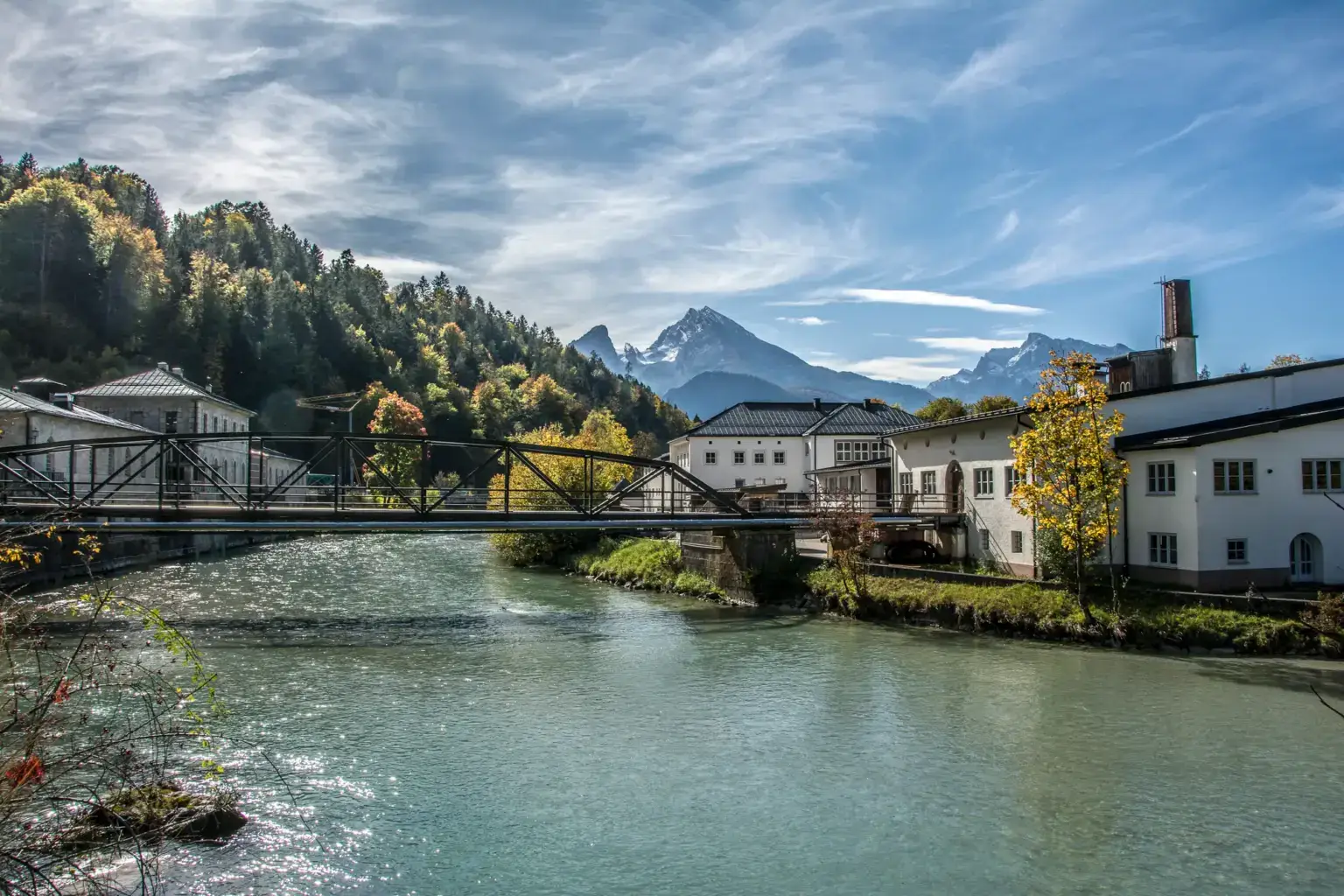
Berchtesgaden Salt Mine on the river Ache in autumn
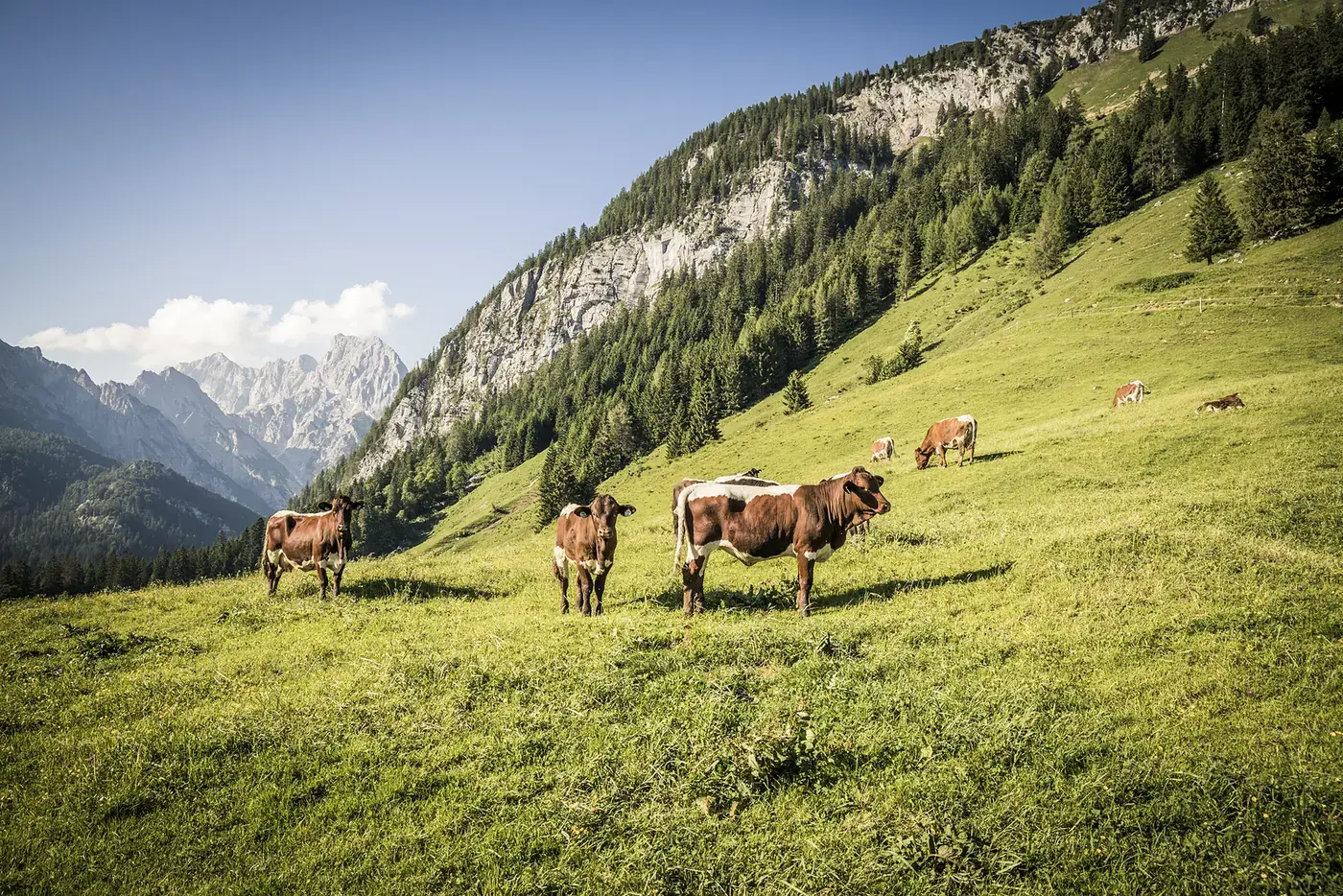
Cows grazing on the Kammerlingalm at the Hirschbichl pass

June to September · on the high pastures

Summer on the Alm

Nowhere in Bavaria are so many high pastures still farmed as here; the practice is listed as intangible cultural heritage. The huts serve walkers from mid-June to late September, Schüsselkas cheese included. Mountain Masses belong to the season, as does the Almer pilgrimage in late August, when up to 2,000 pilgrims cross to St. Bartholomä.

Huts open

usually mid-June to late September

Mountain Masses

May to October, mostly at weekends, weather permitting

Almer pilgrimage

Saturday after 24 August

For guests

keep your distance from cattle, dogs on a lead

Our tip

An Alm is not a petting zoo: keep your distance, take no selfies with grazing cattle and give cows with calves a wide berth.

Alm summer at berchtesgaden.de (German) ↗

Summer season · across the valley

Costume, music and folk evenings

Highlight of the costume societies’ year is the Jahrtag on a Sunday in July, when over 1,000 participants march through Berchtesgaden. The D’Funtenseer folk evening offers Schuhplattler and alphorns on Thursdays in season at the Gasthaus Unterstein, Schönau. In Bischofswiesen, alphorn players perform on four evenings on the Kastensteinerwand, or indoors if wet.

Jahrtag

a Sunday in July

Folk evening

Schönau, Thursdays at 8 pm in season, free entry

Kastensteinerwand

four evenings in July and August, 7 pm, free entry

From the hotel

Kastensteinerwand approx. 45 min on foot · 9 min by car

Our tip

At the Jahrtag, find a spot on the market square early, that is where all the costumes and marksmen pass by together.

Alphorn evenings at the Kastensteinerwand (German) ↗
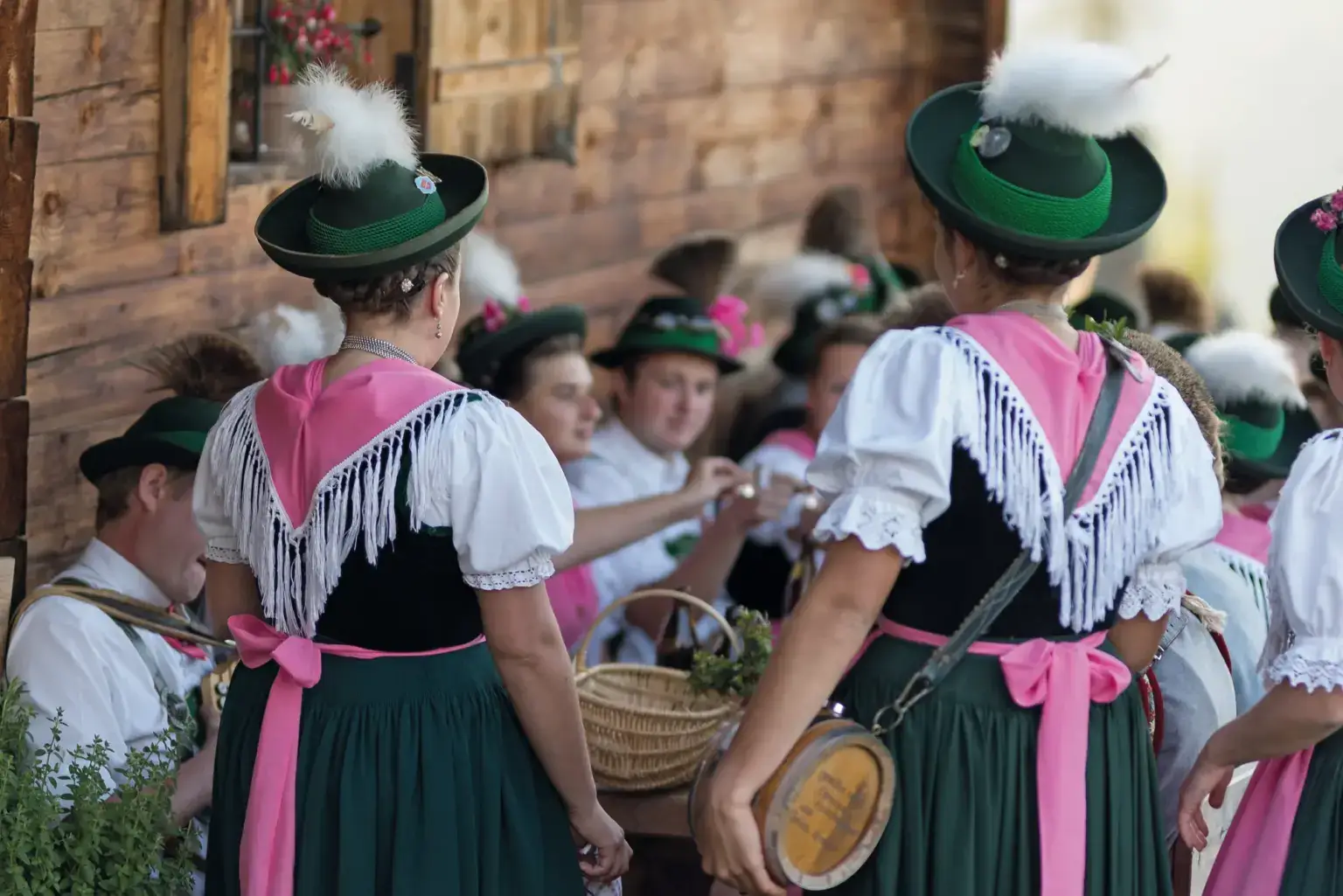
Traditional costume group at a festival in Berchtesgadener Land
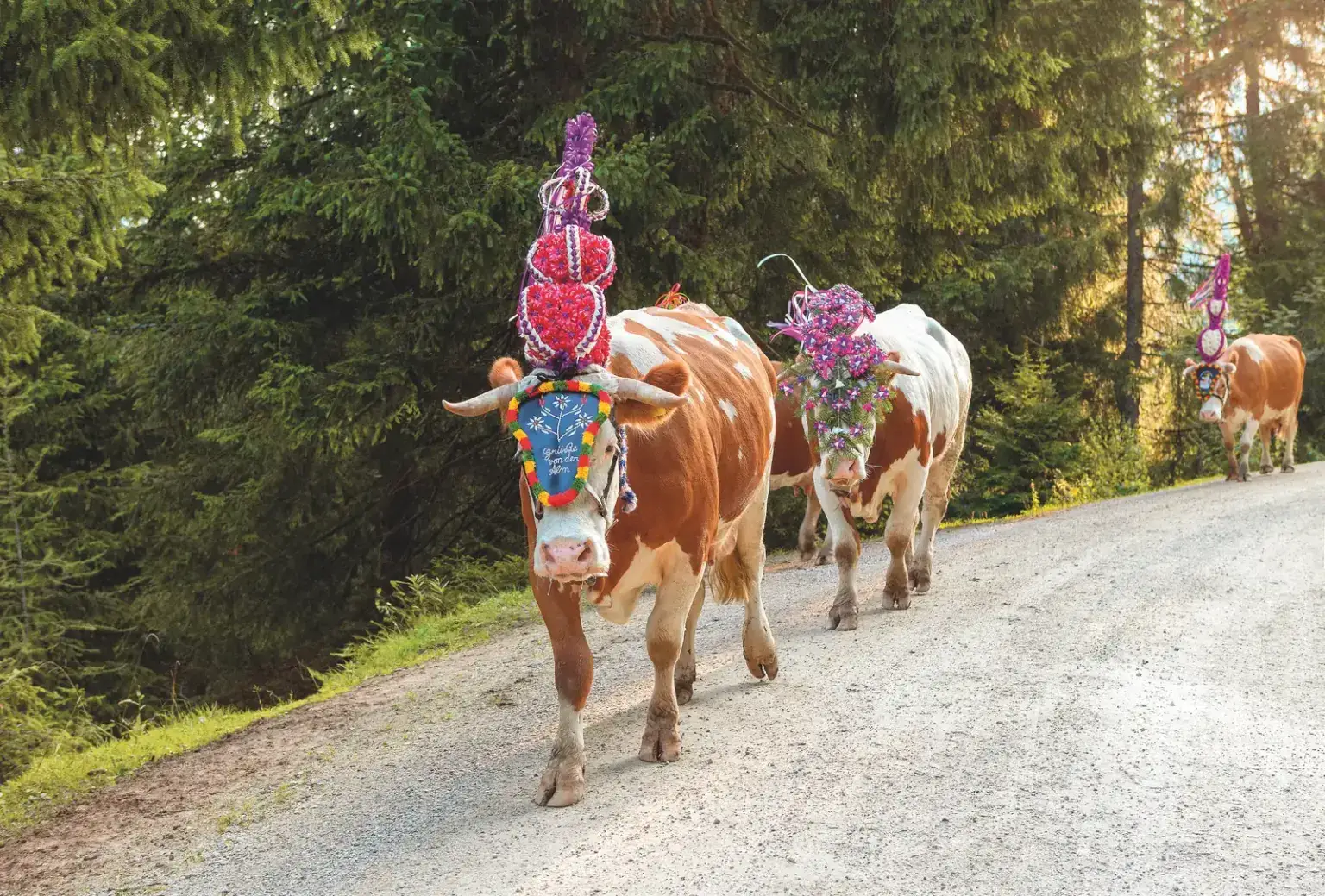
Decorated cows during the autumn cattle drive in Berchtesgadener Land

Late September to mid-October · valley and Lake Königssee

The cattle drive and its Fuikln

From late August the farmers bind Fuikln, spruce crowns with up to 200 rosettes, 30 hours each; cattle are decorated only after a summer without mishap. Valley dates are deliberately not published; the drive depends on the weather. Unique in the Alps: some 30 cows cross Lake Königssee on wooden barges, decorated at the Seelände.

When

late September to mid-October, around Michaelmas (29 Sep)

Dates

deliberately not published in the valley

Stoißer Alm

a Saturday in late September, arrival in Seiberstadt in the afternoon

For guests

keep the path clear, dogs on a lead, don’t touch the cattle

Our tip

No date can be promised; ask locally in autumn, and with a little luck you will see the boats arrive at the Seelände.

Cattle drive at berchtesgaden.de (German) ↗

Late November to 3 January · town and villages

Advent, the quiet season

The Berchtesgaden Advent market favours crafts and folk music over reindeer, with 50 huts, giant ornaments and a lantern trail to the Kirchleitn chapel. In the villages Advent is quieter: children sing from house to house, Bischofswiesen holds a small market on the third Advent Sunday. The AlpenCongress Advent Singing adds folk music without kitsch.

When

from late November to early January, closed on 25 December

Opening hours

Mon to Fri from noon, Sat/Sun from 11 am; 24 and 31 Dec 10 am to 4 pm

From the hotel

approx. 12 min by car · bus 841/839

Lantern trail

2.1 km, approx. 80 m ascent, approx. 60 min, bring a torch

Our tip

Come in the early afternoon, the organisers say it gets busy from about 3.30 pm, and walk the lantern trail as dusk falls.

Berchtesgaden Advent market ↗
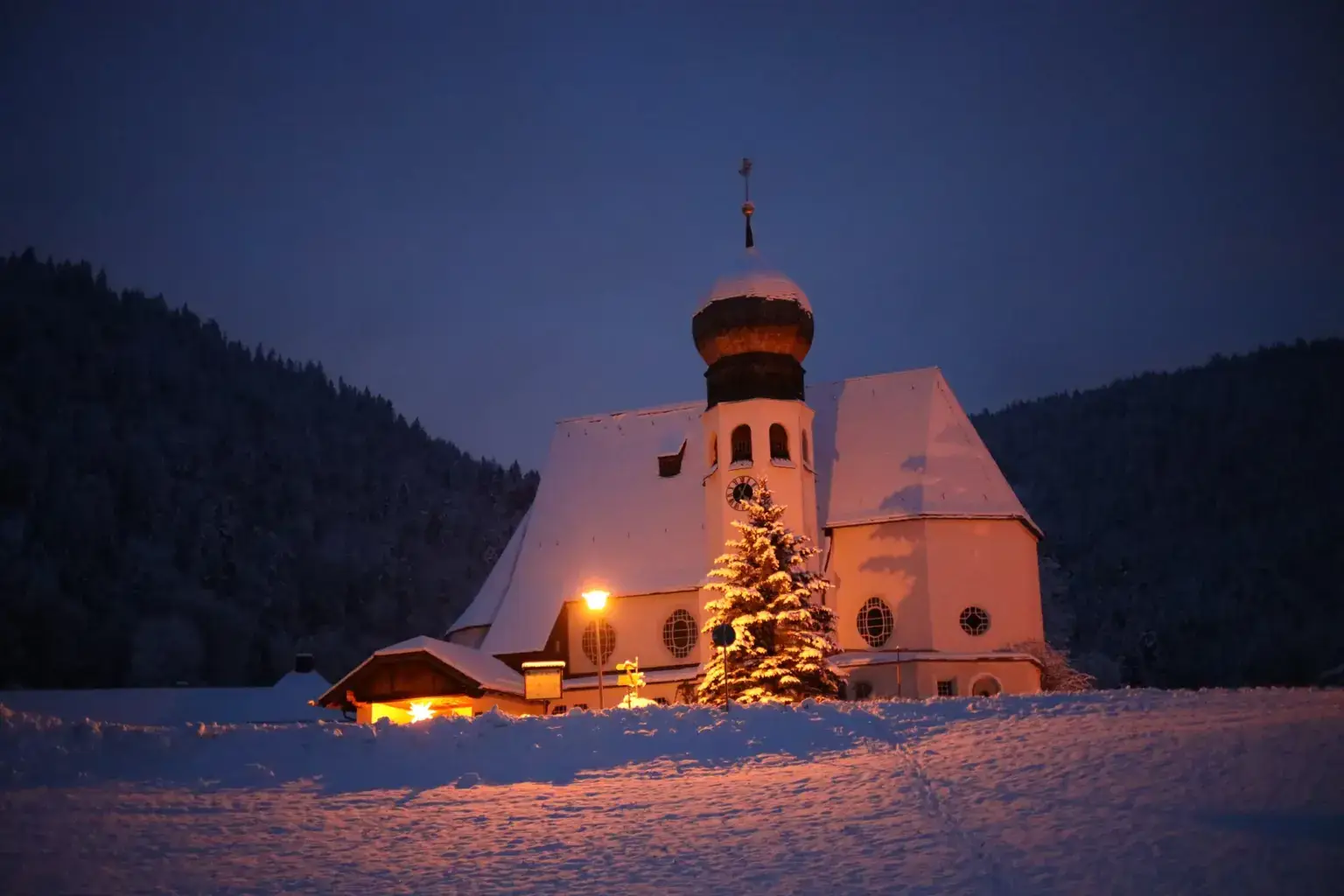
Oberau church with Christmas tree in the snow during Advent
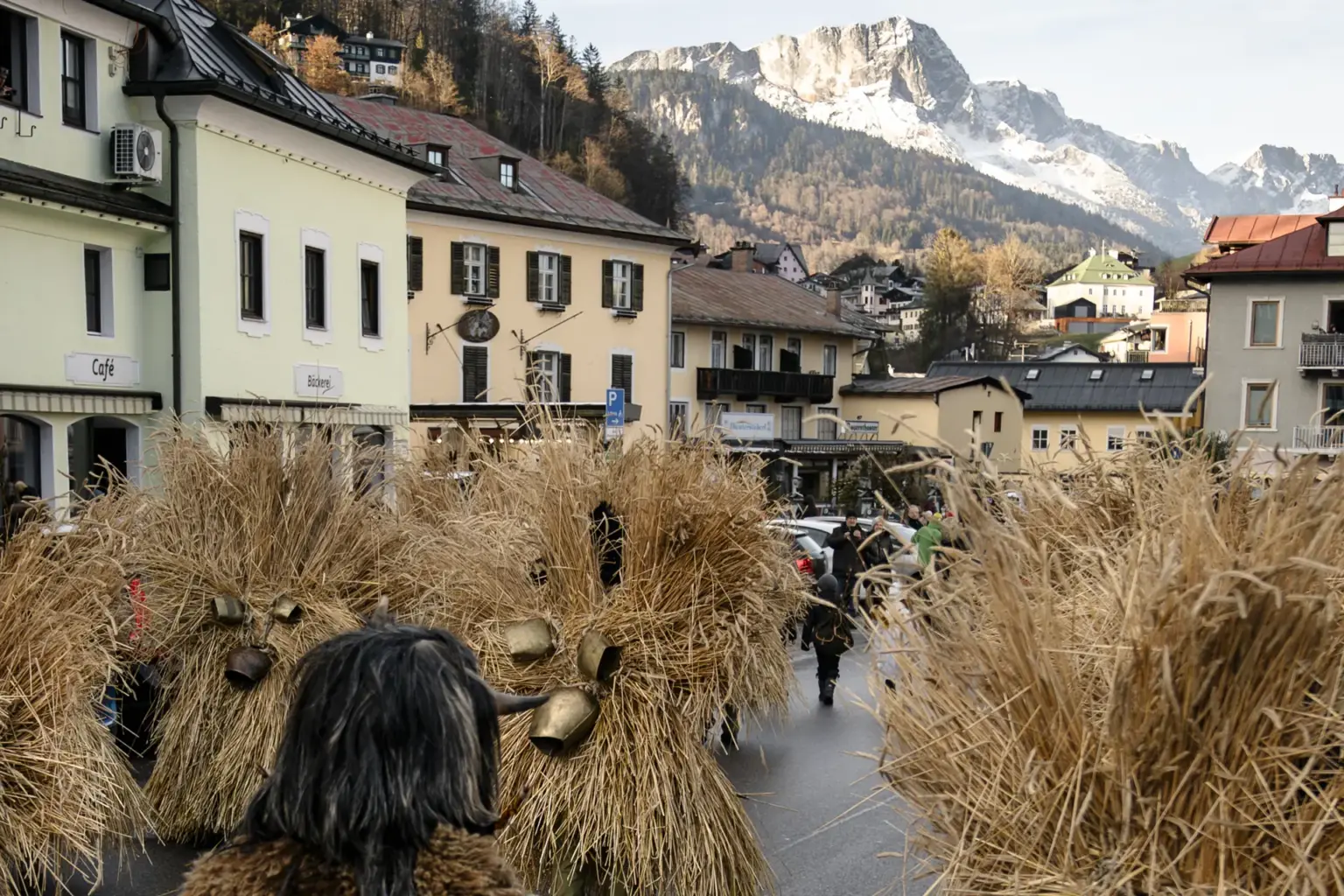
Buttnmandl in straw costumes with cowbells and a fur-clad Kramperl at the Strub mountain troops’ Buttnmandl parade through Berchtesgaden

First Sunday of Advent to Christmas Eve · Bischofswiesen and the valley

Buttnmandl and Kramperl

The Buttnmandl are wrapped in straw, with fur masks and heavy bells; the fur-clad Kramperl pass on St Nicholas’s orders. The custom exists only here, as house visits to families, in Bischofswiesen on the first Sundays of Advent. Public is only the mountain troops’ parade in early December from Strub barracks to the palace square.

Parade

5 Dec, mulled wine from 1.30 pm at Strub barracks, departs 2 pm

Arrival

approx. 3.15 pm on the palace square, Berchtesgaden

House visits

Loipl 1st Advent · Winkl 2nd Advent · 5/6 Dec in many places

For children

loud and frightening, prepare little ones

Our tip

Don’t follow or provoke the groups; anyone who gets too close may feel the “Lebensrute”, a switch of twigs, across their legs.

Buttnmandl at berchtesgaden.de (German) ↗

Advent to New Year · the whole valley

The Christmas marksmen

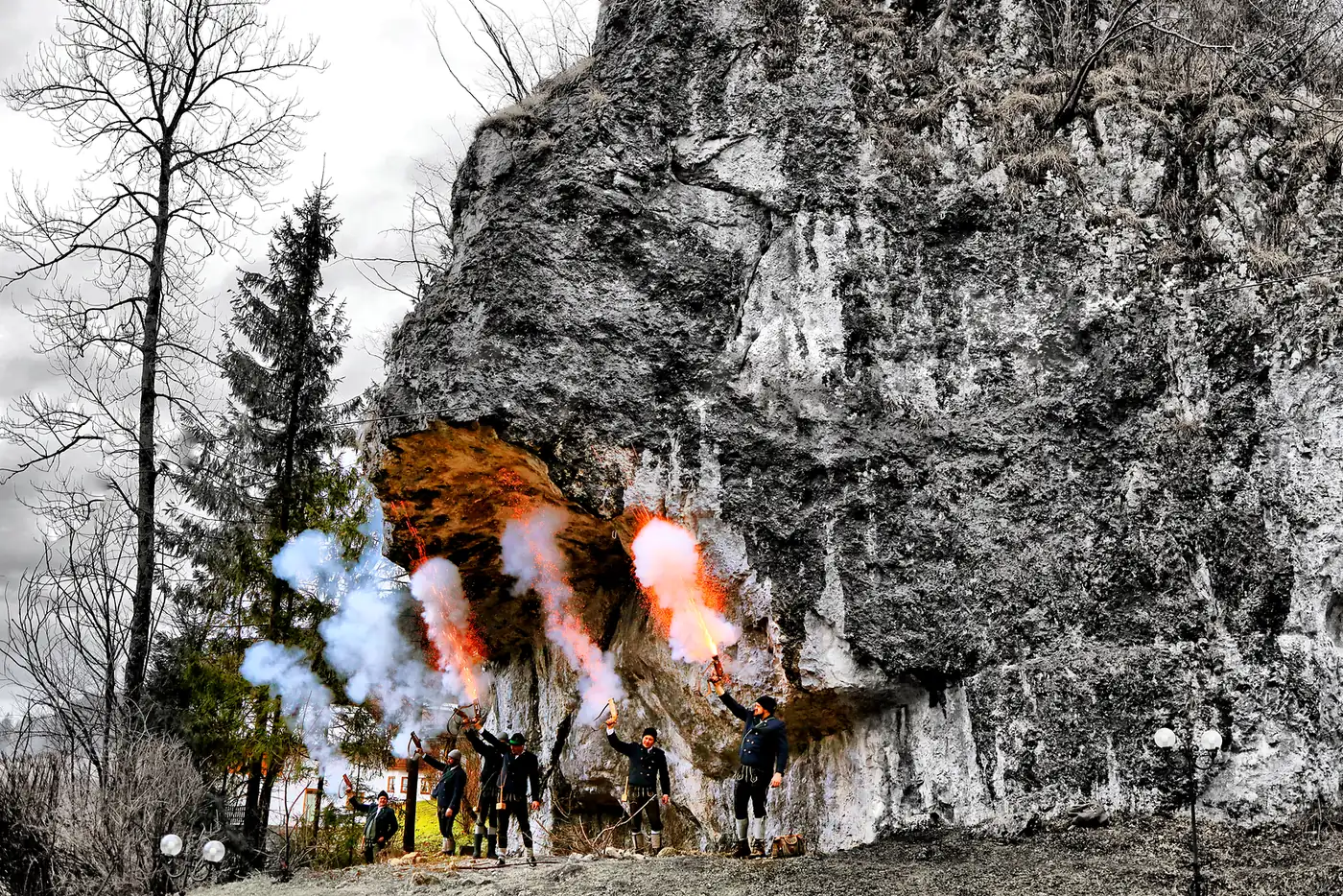
A week before Christmas Eve, afternoon salutes echo round the valley for the Christ Child. Rooted in old noise customs against the dark, each club fires hand mortars from its own hillside spot. Some 3,000 marksmen in 17 clubs, five in Bischofswiesen, keep it alive, heritage-listed since 2018; on Christmas Eve they fire before midnight.

Christ Child salutes

17 to 24 December, daily at 3 pm (varies by club)

Christmas Eve

11.30 pm to midnight, six single shots at the consecration

New Year’s Eve

11.45 to 11.59 pm and 12 to 12.15 am

Firing spots (examples)

Schönau: Hanauerstein · Königssee: Bernbichl

Our tip

The salutes are extremely loud: bring ear protection for children, leave dogs indoors and never step in front of or between the marksmen.

Christmas marksmen at berchtesgaden.de (German) ↗
Christmas marksmen with powder smoke firing their muzzle-loaders at a rock face
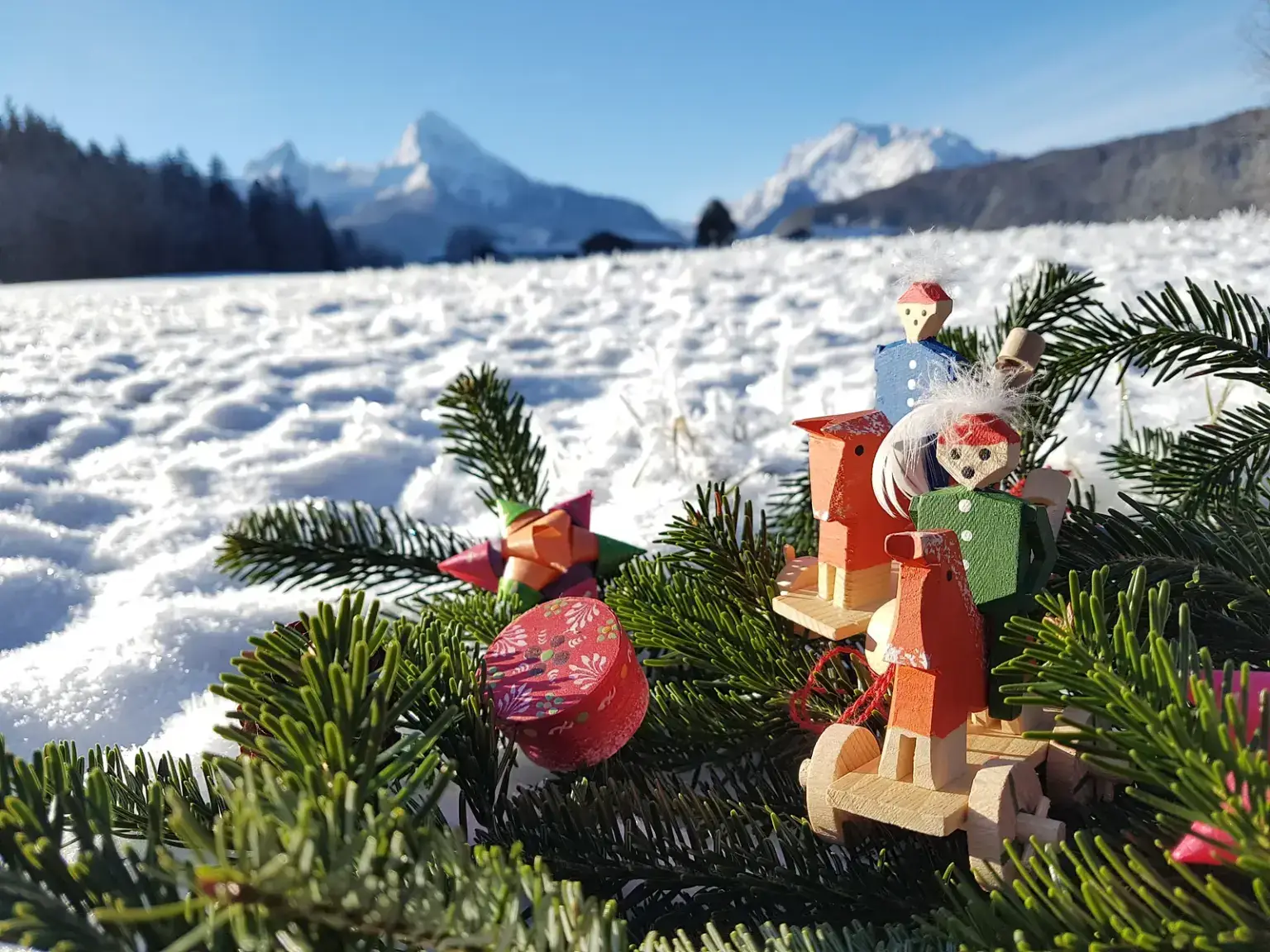
The traditional wooden whistle horse from Berchtesgaden craftsmanship in the snow

All year · Berchtesgaden town

Berchtesgaden woodcraft and the Oaschpfeifirössl

The “Berchtesgadener War”, chip boxes and wooden toys, was a winter sideline of farmers and miners, carried by pedlars as far as Venice. Best known is the Oaschpfeifirössl, a wooden horse with a whistle, the Advent market’s emblem since 2010. Buy it at the Alte Fronveste; an Advent exhibition shows the craftspeople at work.

Shop

Alte Fronveste (c. 1510), Schlossplatz 1½, Berchtesgaden

Open

Mon to Fri 9 am to 12 pm and 2 to 6 pm, Sat 9 am to 1 pm

Exhibition

on the weekend of the Advent Singing at the AlpenCongress

Museum

Schloss Adelsheim, Mar to Oct, Thu to Sun 10 am to 4 pm

Our tip

You will find the Oaschpfeifirössl at the Fronveste, at the stall in the Advent market and in the online shop, a souvenir with a story.

Local woodcraft at berchtesgaden.de (German) ↗

— More customs

Throughout the year.

Christmas to Epiphany · on the farms

Rauhnächte, incense and star singers

The twelve nights between Christmas and Epiphany were held to be a time of special powers. On many farms, families still walk through house and cowshed with embers, incense and herbs blessed in August. That remains private; in public, the star singers chalk the blessing “C+M+B” on the doors.

When: 25 December to 6 January, in places from 21 December · Epiphany: 6 January, a public holiday in Bavaria · Star singers: between the holidays, inns too; donations go to children’s aid

Our tip: At the winter solstice, Kulturhof Stanggaß (approx. 8 min by car) lights a solstice fire with music and Rauhnacht tales, weather permitting.

January and February · Rupertiwinkel

Whip-cracking in the Rupertiwinkel

“Aper” means free of snow. Teams of usually nine crack the Goaßl, a whip with a pitch-coated hemp lash, in strict rhythm, perhaps to drive out winter; nobody knows for sure. The custom lives along the Saalach and Salzach, not in the Berchtesgaden valley; its highlight is the Rupertigau contest with over 1,700 whip-crackers.

When: 26 December to Shrove Tuesday · Where: Rupertiwinkel, e.g. Anger, Teisendorf, Ainring · Highlight: Rupertigau contest, one week before Carnival Sunday

Our tip: The cracks are very loud: stay behind the barriers and keep off the field where the teams perform.

Dates from the Schnalzer association (German) ↗

February · valley and Rupertiwinkel

Carnival and the coopers’ dance

Berchtesgaden is no carnival stronghold: the season is celebrated mainly at club balls and small parades, in Winkl, while the big processions are in Teisendorf and Bad Reichenhall. A rarity is the Schäfflertanz of the TSV Berchtesgaden: its coopers in red jackets and leather aprons dance only every seven years.

When: from the Thursday before Lent to Shrove Tuesday · Where: balls in the valley, big parades in Teisendorf and Bad Reichenhall · Coopers’ dance: every seven years only

Our tip: Balls and parades are listed afresh each year in the events calendar at berchtesgaden.de.

Events calendar (German) ↗

Holy Week and Easter · every church

Easter fire and the blessing of food

The Easter Vigil begins with the Easter fire outside the church; then and on Easter Sunday morning, every church blesses the food families bring for Easter breakfast. A special sight is the eight-metre Holy Sepulchre in the monastery church at Höglwörth, lit by 81 coloured glass globes, set up only every three years.

When: Good Friday to Easter Monday · Holy Sepulchre: Höglwörth, every three years only · Times: Easter Vigil and food blessing in the parish schedule

Our tip: Visitors are welcome at the Holy Week and Easter services; times are listed in the parish service schedule (German).

Stiftsland parish services (German) ↗

May or June · parishes in the valley

Corpus Christi, the Prangertag

Locally, Corpus Christi is called “Prangertag”, from an old word for parading in finery. Processions lead to decorated altars, accompanied by costume societies, banner parties and brass bands, in places by gun salutes. In Marktschellenberg the day starts early with the riflemen’s Mass; after High Mass the procession circles the village, in fine weather only.

When: Corpus Christi, a public holiday in Bavaria, the second Thursday after Whitsun · Where: in the parishes, e.g. Marktschellenberg, Strub, Schönau · Times: in the parish schedules, usually shortly before

Our tip: Stand at the roadside and let the procession pass quietly; it is a service held in the open air.

Corpus Christi in Marktschellenberg (German) ↗

Around 21 and 24 June · mountains and valley

Midsummer and St John’s fires

Midsummer bonfires date back to the Middle Ages; the Church linked them with St John the Baptist, whose feast falls in late June. Easiest to reach is the Jennerbahn top station, where the fire brigade lights the St John’s fire late in the evening and the cable car runs until midnight.

When: around 21 or 24 June, mostly at weekends · Jenner: midsummer party on a Saturday around the solstice

Our tip: Only visit organised fires, and keep an eye on the last cable car or bus back down.

Jennerbahn events (German) ↗

First Sunday in October · parish churches

Harvest festival with a procession

On the first Sunday in October most parishes decorate their altars with the harvest; in farming villages, Erntedank gives thanks for the harvest and a summer without accidents. In Ramsau the morning procession walks to the decorated Kunterweg pilgrimage church and back; afterwards the brass band plays in the Oberwirt’s beer garden, weather permitting.

When: usually the 1st Sunday in October · Ramsau: 8 am procession, then a concert at the Oberwirt · Times: in each parish’s service schedule

Our tip: Combine the Ramsau procession with a look at the Malerwinkel by St Sebastian’s parish church, the region’s best-known photo spot.

Third Sunday in October · all over Bavaria

Kirchweih, the Allerweltskirta

Each church used to celebrate its own consecration day; as there was always a fair somewhere, the Bavarian dioceses set a common date in 1866, the third Sunday in October, nicknamed the “Allerweltskirta”. Then the red-and-white Kirchweih flag flies from the tower. Salzburg’s Rupertikirtag (late September) and the Schellenberger Kirtag (July) are separate feasts.

When: the 3rd Sunday in October · Rupertikirtag: Salzburg old town, around 24 September · Schellenberg fair: Sunday after St Ulrich’s Day (4 July), about 100 stalls

Our tip: On Kirchweih Sunday, the Fürmann Alm in Anger traditionally hosts a “Hoagart”, an open get-together with folk music, free entry.

Rupertikirtag in Salzburg (German) ↗

November and Whit Monday · neighbouring villages

Leonhardi rides for the patron of livestock

The Leonhardiritt is a procession on horseback honouring St Leonard, patron saint of livestock; horses wear braided manes and flowers, riders and carters come in traditional dress for the blessing. Grödig below the Untersberg rides in early November; Holzhausen near Teisendorf, with over 300 horses and the district’s oldest cultural event, rides on Whit Monday.

Grödig (Salzburg): Sunday around 6 November · Grödig programme: 9 am ride, 10 am open-air Mass with blessing of horses · Holzhausen: Whit Monday

Our tip: Keep your distance from the decorated horses and follow the stewards; the blessing is part of a church service.

Leonhardi ride in Holzhausen (German) ↗

Last updated: September 2026 · subject to change · Many dates depend on the weather and the church calendar and are only announced at short notice; please check the events calendar or with the organiser beforehand.


Experience tradition.

Book directly with us. Over breakfast we are happy to help you plan your days.

Location & all excursions